
Home/What We Do
What we do
What we are building, and what we will not do.
Three streams of work. Each programme is marked honestly, and each one that carries a legal limit says so on the same page rather than in a footnote.
Stream one
Sikh faith and heritage
We promote the Sikh faith and we hold Sikh religious services. The values behind everything else on this page come from there, and this part of our work is about keeping that living rather than simply assumed.
Promoting the Sikh faith
We promote the Sikh faith and share its teachings openly. Seva given without expectation, the equality of every person, and the understanding that nobody stands above or below anybody else.
Offered to whoever wants it. Never pressed on anyone.
Sikh religious services
We hold Sikh religious services for our community, in halls and homes across the Fraser Valley and Greater Vancouver.
What is on and when is shared directly with our sangat for now. As it settles into a regular pattern, we will publish it here.
Gathering through the year
Observances and gatherings that mark the days which matter in the Sikh calendar, held with the community rather than put on for it.
Free to attend. Open to everyone, whatever they believe or do not believe.
Learning and study
Space for people who want to understand the tradition more deeply rather than simply inherit it, including people who grew up around Sikhi without ever being taught it directly.
Passing it on
Making sure the language, the history and the practice reach the next generation, so that a grandparent and a grandchild still have something they can share properly.
Work done with our elders, who are the ones actually carrying it, rather than about them.
A welcome for the curious
If you are not Sikh and you would simply like to understand what all of this is, you are welcome. Come and ask. Nobody will try to convert you and nobody will mind the questions.
What this looks like right now
Some of this already happens, quietly and on a small scale, in borrowed halls and in people's homes. We are not going to set it out here like a programme brochure, because it is not one yet. As it grows and there are dates worth publishing, they will appear on our events page along with everything else.
The one thing that will not change
Our roots are Sikh and we do not hide it. But nobody is ever asked their faith before they are helped, before they are fed, or before they are handed a box and put to work. Every other thing on this page is open to every person of every background and every belief. That is not a line for a website. It is the whole idea behind the word seva, and a foundation that forgot it would not be worth running.
Stream two
Seva and support
Practical help for neighbours going through a hard stretch. This is the bulk of what we do and the part with the most legal boundaries, so we set them out programme by programme.
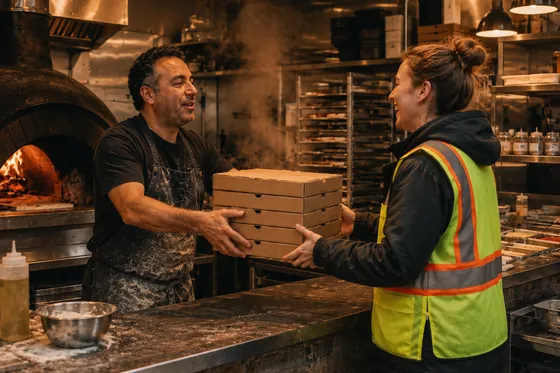
Hot meals handed out in person
Meals taken directly to people living outside, starting with our pizza and pop night. No queue, no forms, no names taken and no photographs of anyone.
How the food works: we do not have a kitchen and we do not cook. Every meal is ordered from a licensed restaurant or commercial food business and handed straight out by our volunteers. In British Columbia, food given to the public has to come from an approved commercial source, so buying it is the safest and simplest way to do this properly.
Buying the food is only half of it. Before a meal run we contact the environmental health officer at our local health authority, describe exactly what we are doing, and do whatever they ask of us. Depending on the health authority and the food, that can mean a temporary food premises approval or simply written notification. There is no fee for it, it goes in at least fourteen days ahead, and we will not run a handout without it. Home cooked food cannot be used for a public handout, however kindly it is offered.
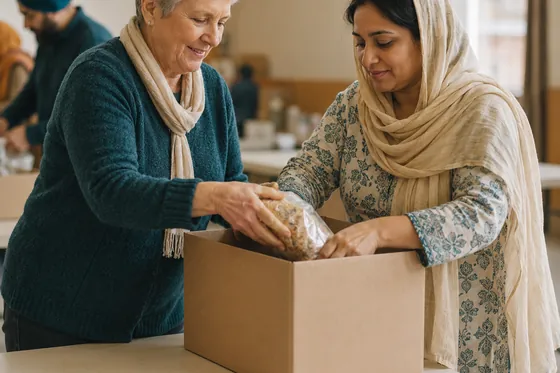
Grocery hampers and basic needs
Hampers of unopened, in date groceries and household basics for families having a difficult month, delivered quietly and without a queue.
What we can accept: new, sealed, commercially packaged, in date food and goods. What we cannot accept: home cooked food, home canned vegetables, meat or fish, unpasteurised dairy, uninspected or wild meat, opened packages, and anything past a true expiry date. Some of those are food safety rules we have no discretion about. Others are simply our own line, kept simple so that nobody receiving a hamper has to wonder.

Blood and plasma donation drives
We recruit donors, fill appointment blocks and get people through the door. Canadian Blood Services runs every blood and plasma collection in British Columbia. We never collect, screen donors or handle blood, and we never will.
Our first drive is being booked now, but you do not have to wait for it. Canadian Blood Services takes bookings directly, at blood.ca or on 1 888 236 6283.

Organ and tissue donor registration
Registration drives to help people join the British Columbia Organ Donor Registry, including help for people who read more comfortably in Punjabi.
You can register yourself right now, in about two minutes. You will need your BC Personal Health Number, your name, your date of birth and a British Columbia address. If you are 19 or older, your registration is a legally valid record of your decision, and BC Transplant shows that record to your family at the time. For help, BC Transplant can be reached on 604 877 2240 or 1 800 663 6189.



Hygiene and menstrual supplies
New, sealed, in date menstrual and hygiene supplies, distributed through schools, shelters and partner organisations as well as handed out directly on our meal nights. No registration, no names taken, no photographs.
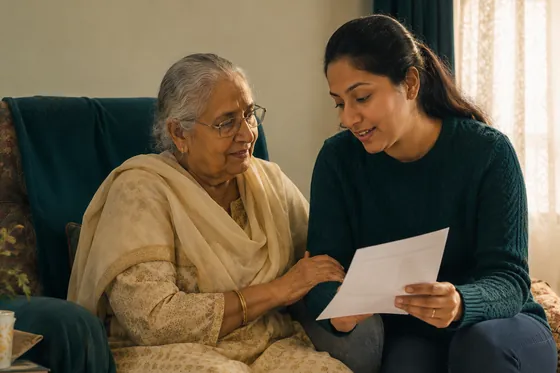
Seniors support
Rides to appointments, home visits, help with paperwork, and company for an elder who is otherwise spending the week alone. Every volunteer working one to one with a senior will hold a criminal record check with vulnerable sector screening.
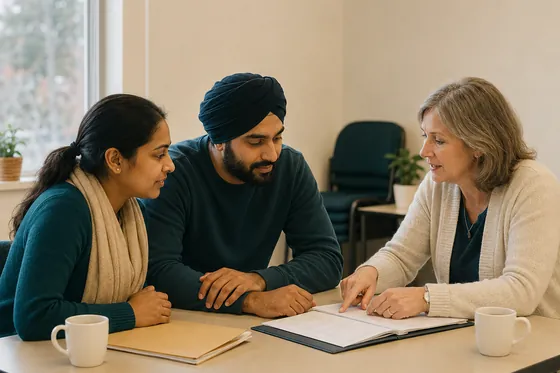
Newcomer support
Orientation, help understanding a form, interpretation between Punjabi and English, and a friendly face at an appointment.
The boundary: paid immigration advice in Canada is a regulated profession. Only lawyers, Quebec notaries and licensees of the College of Immigration and Citizenship Consultants may advise or represent someone for a fee. We never charge for anything, so that rule does not restrict us, and we have chosen to draw the line further back anyway. We do not give immigration advice and we do not fill in immigration applications on anyone's behalf. Those decisions matter far too much to rest on a well meaning volunteer. We help people understand what is in front of them, then point them to properly qualified help.
Emergency and disaster relief
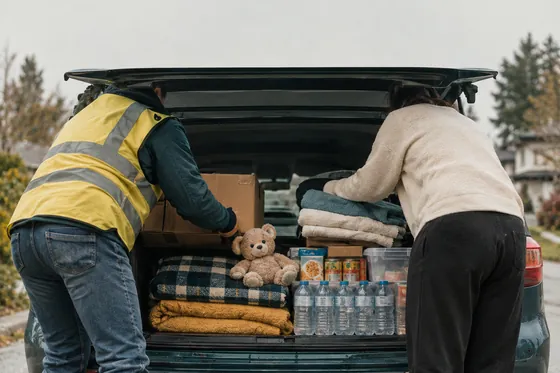
When a fire, a flood or a sudden loss hits a household in our area, a fast round of practical help: bedding, groceries, clothing and transport. Coordinated with the agencies already responding, never in front of them.
Stream three
Community and culture
The gatherings that turn a set of households into a neighbourhood, and that keep heritage from thinning out with each generation.
Gatherings and celebrations
Community events and observances through the year. Free to attend, open to everyone, and never ticketed in a way that quietly excludes people.
Heritage and language
Music, language, history and the stories of how our families came to be here. Programs built with elders rather than about them.
Youth mentorship
Mentorship, tutoring and a place to be useful, for young people who are looking for both. Every adult involved will hold a criminal record check with vulnerable sector screening before they start.
Before any programme involving children begins
Every adult volunteer working with children will hold a current criminal record check with vulnerable sector screening, will have a written role description with clear limits, and will never be alone and unobserved with a child. No programme for children will open until that screening is complete for every adult in the room.
Mental health
We raise awareness. We do not provide treatment.
Mental health work is where well meaning community organisations do the most accidental harm. We would rather be clear about the line than blur it.
What we will do
- Awareness events and talks that reduce stigma
- Plain language education in Punjabi and English
- Warm referral: staying with someone until they are connected to real help
- Practical support such as a ride to an appointment, childcare during one, or groceries during a hard month
- Hosting registered professionals who work under their own registration and insurance
What we will never do
- Counselling or therapy under any name
- Diagnosing or labelling any condition
- Any advice about medication
- Running a crisis line
- Managing a person in crisis ourselves instead of connecting them to emergency help
If you need help right now
These are the numbers to use. They are staffed by trained people, they are free, and they are not us.
- Immediate danger to life
- 9‑1‑1
- Suicide Crisis Helpline, call or text, 24 hours a day, every day
- 9‑8‑8
- 310 Mental Health Support, emotional support and referrals, no area code needed
- 310‑6789
- HealthLink BC, nurses 24 hours a day, translation in over 130 languages
- 8‑1‑1
- VictimLinkBC, call or text, 24 hours a day, up to 150 languages
- 1 800 563 0808
Safety of women and children
The highest risk work, held to the tightest limits.
We intend to support people living with harm at home. That support is real, and it stops well short of things that require licensing, training and professional registration we do not have.
What we will do
- Know your rights sessions in Punjabi and English
- Going with someone to an appointment, a police detachment or a legal aid office when they ask
- Practical help: groceries, clothing, a phone, a bus pass
- Referral to VictimLinkBC, transition houses, police and legal services
What we will never do
- Operate a transition house, safe home or shelter
- Provide counselling or therapy
- Take custody of a child, or place a child anywhere
- Handle a disclosure of abuse internally instead of reporting it
The duty to report is not optional, and it is not only ours
In British Columbia, under section 14 of the Child, Family and Community Service Act, everyone has a legal duty to report if they believe a child or youth under 19 may need protection. You do not need to be certain. You do not need to be a professional. Call the Ministry of Children and Family Development on 1 800 663 9122, staffed 24 hours a day, every day of the year. Children and youth can call the Helpline for Children themselves on 1 877 631 8282. If a child is in immediate danger, call 9‑1‑1.
Every volunteer of this foundation is trained on this duty and is instructed to report. We do not investigate, we do not mediate, and we do not keep it in the community.
Come with us
The first two seva days need volunteers.
A blood and plasma drive, and a pizza and pop night for people living outside. Both are being organised right now, and both need more hands than we currently have.